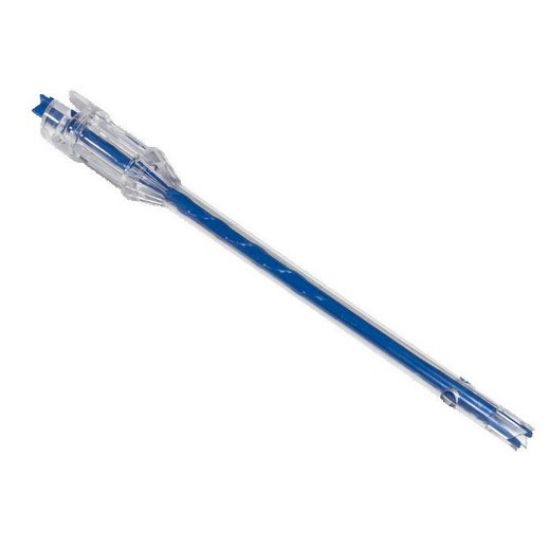
The Revvity Hard Tissue Omni Tips, 7 mm, Pack of 500 (35750H), are disposable plastic homogenising probes designed for hard tissue sample preparation. Each 7 mm by 110 mm saw-tooth probe processes sample volumes from 250 µL to 30 mL and supports contamination-sensitive research workflows such as PCR, RNA extraction and DNA extraction.
Key Features
- Designed for hard tissue homogenisation, providing a disposable probe format for demanding sample preparation workflows
- Flexible 250 µL to 30 mL sample range, accommodating low-volume and routine laboratory processing
- Compact 7 mm by 110 mm probe dimensions, providing a defined format for compatible vessels and homogenisers
- Saw-tooth processing geometry, designed for effective disruption of hard tissue samples
- B-style drive connection, supporting attachment to compatible Omni homogenising equipment
- Durable two-part plastic construction, using Lexan 144R polycarbonate and Ultem 1000 polyetherimide
- Broad Omni equipment compatibility, supporting Omni GLH, Omni TH, Omni THQ and Omni automation equipment
- Bulk supply for regular laboratory use, with 500 disposable Hard Tissue Omni Tips per pack
Note: For research use only and not for use in diagnostic procedures.
Benefits
- Helps reduce sample-to-sample cross-contamination by allowing probes to be discarded after processing.
- Reduces the disassembly, cleaning and maintenance associated with reusable stainless-steel generator probes.
- Supports contamination-sensitive PCR, RNA extraction and DNA extraction sample preparation.
- Allows laboratories to process sample volumes from 250 µL to 30 mL with one probe format.
- Provides a substantial 500-probe supply for laboratories with regular or higher-throughput homogenisation requirements.
Why Choose the Revvity Hard Tissue Omni Tips, 7 mm, Pack of 500 (35750H)?
These Hard Tissue Omni Tips combine disposable probe convenience with a saw-tooth design intended for hard tissue homogenisation. John Morris Group supplies Revvity Omni consumables for research laboratories seeking efficient sample disruption with reduced cleaning and cross-contamination concerns.