What Is An Osmometer? How It Works, Types And Laboratory Uses
An osmometer measures the osmolality of a solution, the total concentration of dissolved particles per kilogram of solvent.
Freezing point depression is the gold-standard method for clinical, pharmaceutical and food testing, while vapor pressure and membrane osmometry suit specific sample types.
What Does An Osmometer Measure?
An osmometer measures osmolality, the concentration of all dissolved solutes per kilogram of solvent, expressed in milliosmoles per kilogram (mOsm/kg). It measures the combined effect of everything dissolved in a sample, not just one ingredient.
This is different from osmolarity, which is concentration per litre of solution and is typically a calculated value. Osmolality is preferred in laboratory practice because it isn't affected by temperature or the volume changes that occur when solutes dissolve.
Which Osmometer Do You Need?
The right osmometer depends on sample volume, throughput and how the results will be used. Consider available sample size, how many samples you run per day, and whether your lab operates under regulated data-integrity requirements.
Choose Single-Sample If
- •Sample volume is precious or limited
- •You run individual samples on demand
- •Testing body fluids such as serum or urine
- •Bench space or budget is limited
- •Testing volume is low to moderate
Choose Multi-Sample If
- •You process sample batches daily
- •Minimal operator intervention is a priority
- •You need unattended overnight runs
- •You operate in a regulated environment
- •Throughput matters more than upfront cost
Ask Before Buying
- •What is the minimum sample volume?
- •Does it support 21 CFR Part 11 / EU Annex 11?
- •What calibration standards does it require?
- •Will it handle volatile-containing samples?
- •What is the daily sample throughput?
Freezing Point Vs Vapor Pressure Osmometry At A Glance
These are the two most commonly compared osmometry methods. This table shows where freezing point depression is usually the better choice and where vapor pressure osmometry may still be suitable.
| Criteria | Freezing Point Depression | Vapor Pressure | Better Choice |
|---|---|---|---|
| Clinical & Pharma Testing | ✓ Industry gold standard | ✕ Less commonly used | Freezing Point |
| Samples With Volatiles (e.g. Alcohol) | ✓ Measures all solutes accurately | ✕ Can under-read volatile compounds | Freezing Point |
| Reproducibility | ✓ Highly reproducible | ✕ More sensitive to technique | Freezing Point |
| Vapor-Phase-Only Applications | ✕ Not applicable | ✓ Purpose-built for this use case | Vapor Pressure |
What Is An Osmometer?
An osmometer is a laboratory instrument that measures the osmolality of a solution, the total concentration of all dissolved solutes (salts, sugars, proteins and other molecules) per kilogram of solvent, expressed in milliosmoles per kilogram (mOsm/kg).
Unlike instruments that measure the concentration of a single substance, an osmometer measures the combined effect of everything dissolved in a sample. This makes it essential wherever the overall concentration of a solution, not just one ingredient, determines whether a product, sample or process is within spec.
For calibration standards used to verify osmometer accuracy, see our guide to laboratory calibration standards.
Common Osmometer Applications
- •Clinical diagnostics: serum and urine osmolality
- •Pharmaceutical formulation and stability testing
- •Biotech process and batch consistency checks
- •Food and beverage quality control
- •Research with limited sample availability
What Is Membrane Osmometry?
Membrane osmometry measures osmotic pressure directly across a semi-permeable membrane, rather than measuring freezing point or vapor pressure changes. It is typically used for larger molecules such as polymers and macromolecules rather than routine clinical or food samples.
Because it targets a different measurement range and molecule size than freezing point or vapor pressure instruments, membrane osmometry is a specialist technique rather than a general laboratory workhorse.
For most clinical, pharmaceutical and food laboratories, a freezing point depression osmometer will cover the vast majority of testing needs.
How The Three Osmometry Methods Compare
Each method measures osmolality through a different physical principle. The table below gives a practical comparison for choosing the right approach.
| Feature | Freezing Point Depression | Vapor Pressure | Membrane |
|---|---|---|---|
| Physical Principle | Freezing point lowered by dissolved solutes | Vapor pressure reduced by dissolved solutes | Osmotic pressure across a semi-permeable membrane |
| Handles Volatile Solutes | Yes, not disrupted by volatiles | No, can under-read volatile compounds | Not typically applicable |
| Typical Sample Type | Serum, urine, pharmaceutical formulations, food and beverage | Non-volatile aqueous samples | Polymers and macromolecules |
| Industry Status | Gold standard for clinical and pharma testing | Niche, vapor-phase-specific applications | Specialist polymer science use |
| Common Sample Volume | As little as 20 to 30 µL on micro-osmometers | Varies by instrument | Typically larger volumes |
Why Freezing Point Depression Is Preferred In Laboratories
1. Not Affected By Volatile Compounds
Freezing point depression measures all dissolved solutes, including volatiles like alcohol, unlike vapor pressure osmometry which can under-read samples containing volatile compounds.
2. Highly Reproducible Results
The technique isn't disrupted by sample turbidity and delivers consistent, defensible results across repeated runs, which matters for regulated testing environments.
3. Works Across A Wide Concentration Range
Freezing point instruments handle low and high osmolality samples reliably, making them suitable across clinical, pharmaceutical and food testing without switching methods.
4. Minimal Sample Volume Required
Modern micro-osmometers need as little as 20 µL, which matters when working with limited clinical specimens such as infant or animal serum.
5. Industry-Recognised Gold Standard
Freezing point depression is the method most clinical, pharmaceutical and food-testing laboratories rely on, supporting consistency with regulatory and industry expectations.
6. Suitable For Regulated Environments
Multi-sample automated osmometers built around this method support 21 CFR Part 11 and EU Annex 11 data integrity requirements for regulated testing.
When Should You Consider Vapor Pressure Osmometry?
Vapor pressure osmometry can be suitable when a workflow is specifically built around vapor-phase measurement and the sample is known to be free of volatile solutes. It may also suit applications where freezing the sample is undesirable.
However, vapor pressure osmometry is generally not the best choice for samples that may contain alcohol or other volatile compounds, or for clinical and pharmaceutical testing where the freezing point method is the established standard.
The simplest rule is this: if the sample may contain volatiles, or the work is clinical, pharmaceutical or food testing, freezing point depression is usually the better choice.
Osmometers At John Morris Group
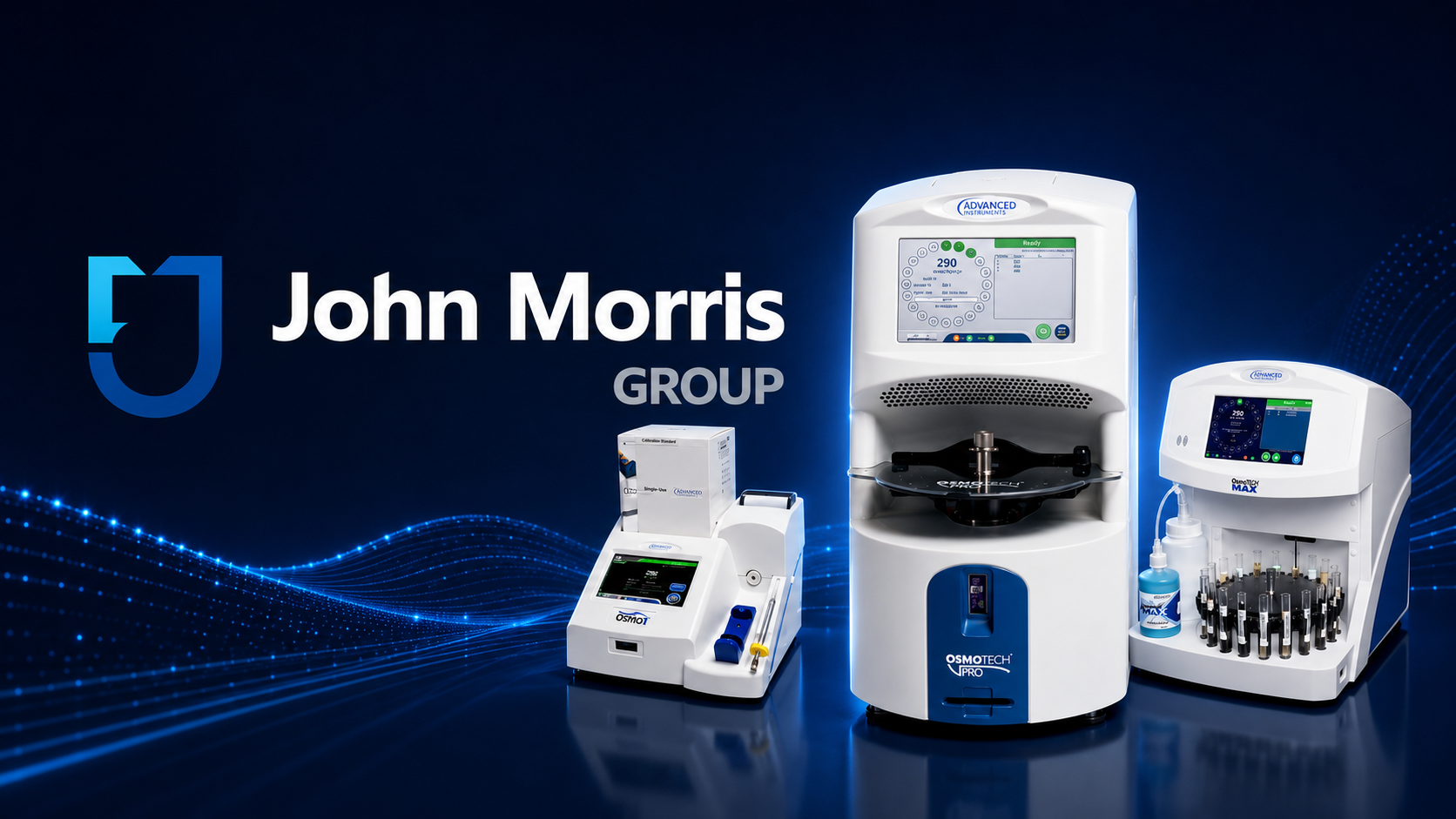
John Morris Group supplies the full Advanced Instruments range, a global leader in freezing point depression osmometry since 1955, built for clinical, biotech and food laboratories.
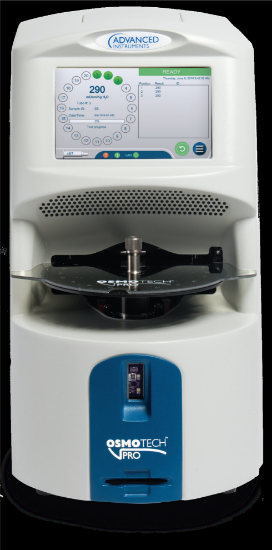
OsmoTECH PRO
Multi-sample micro-osmometer for automated batch processing with sample volumes as low as 30 µL, built for higher-throughput labs including cell culture and bioprocess QC.
Browse OsmoTECH PRO
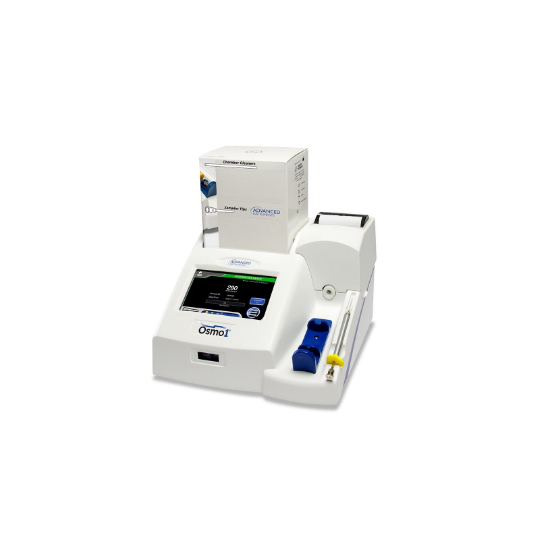
Osmo1
Single-sample micro-osmometer purpose-built for body fluid testing, ideal where individual samples are run on demand from just 20 µL.
Browse Osmo1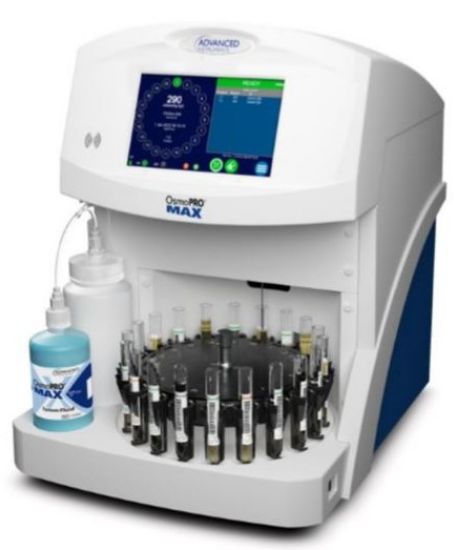
OSMOPRO-MAX
Fully automated osmometer with continuous sample loading, built for serum, plasma and urine testing at higher throughput.
Browse OSMOPRO-MAX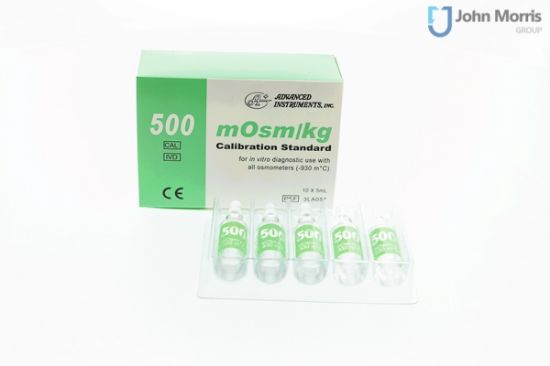
Calibration Standards
Certified H₂O calibration standards at multiple mOsm/kg concentrations for routine osmometer calibration and verification.
Browse Calibration StandardsCalibration Checklist
- •Use certified multi-level standards
- •Cover low, normal and high ranges
- •Calibrate each testing session or shift
- •Re-verify periodically with a control sample
How Do You Calibrate An Osmometer?
Calibration is done using certified osmolality standards at multiple concentration points, commonly a 3-level control covering low, normal and high ranges, to verify the instrument reads accurately across the full range it will be used for.
Most labs calibrate at the start of each testing session or shift, then re-verify with a control sample at set intervals to catch drift before it affects results.
Does Alcohol Interfere With Osmometer Readings?
No, not with a freezing point depression osmometer. This is actually an advantage of the freezing point method over vapor pressure osmometry. Freezing point depression measures all dissolved solutes, including volatiles like alcohol.
Vapor pressure osmometers, by contrast, can under-read samples containing volatile compounds because those compounds evaporate rather than register in the vapor-phase measurement.
If your samples may contain alcohol or other volatiles, a freezing point depression osmometer will give a more accurate result.
What Do Osmolality Results Actually Mean?
An osmometer reports a number in mOsm/kg. What counts as a normal or abnormal result depends heavily on the sample type. The ranges below are general laboratory reference points, not a substitute for your own laboratory's validated ranges.
| Sample Type | Typical Reference Range | Notes |
|---|---|---|
| Serum / Plasma | 275 to 295 mOsm/kg | Reflects hydration status and electrolyte balance |
| Urine (random specimen) | Roughly 500 to 850 mOsm/kg, with a wider possible range of 50 to 1200 mOsm/kg | Varies significantly with hydration, diet and kidney function |
| Urine (fluid-restricted) | Generally above 850 mOsm/kg | Used to assess the kidney's urine-concentrating ability |
These figures are general laboratory science reference information, not clinical advice. Always interpret results against your laboratory's validated reference ranges and relevant clinical guidelines.
What Is An Osmolal Gap?
The osmolal gap is the difference between the osmolality an osmometer actually measures and the osmolality calculated from a sample's sodium, glucose and urea concentrations. A normal gap is generally below 10 mOsm/kg.
A gap above roughly 20 mOsm/kg indicates the presence of an osmotically active substance the calculation does not account for. Common causes include low molecular weight alcohols such as methanol, ethylene glycol and isopropanol, along with conditions like ketoacidosis, renal failure and shock, or the presence of mannitol or contrast dye.
Because the gap depends on an accurate measured osmolality value in the first place, a properly calibrated osmometer is what makes this calculation meaningful.
Why Osmolality Matters In Cell Culture
Mammalian cell culture media, including CHO (Chinese hamster ovary) cell systems used for antibody production, are typically run within an osmolality range of around 270 to 340 mOsm/kg, with many processes targeting 300 to 330 mOsm/kg. Osmolality outside this range can reduce the specific cell growth rate and affect product titre and glycosylation.
Osmolality drifts naturally during a bioprocess run as feeds, base additions and metabolic byproducts change the media composition. Because of this, osmolality is checked as a routine in-process control, not just once at the start of a batch.
This differs from the single-sample clinical testing described above. Bioprocess labs typically run more samples through the day, which is why multi-sample automated osmometers such as OsmoTECH PRO suit routine bioprocess monitoring.
Why Osmolality Drifts In A Bioreactor
- •Base and feed additions during fed-batch runs
- •Metabolic byproduct accumulation over the run
- •Media lot-to-lot variability
- •pH adjustment additions
- •Evaporation over long culture durations
Explore More Laboratory Measurement & Calibration Resources
Osmometry is only one part of laboratory measurement accuracy. Labs also rely on properly calibrated viscometers and NATA-accredited calibration services for reliable, defensible results.
Viscometer Calibration Guide
Learn what viscosity standards are and how they're used to calibrate laboratory viscometers.
Read The Calibration GuideNATA Pipette Calibration Services
See how John Morris Group's NATA-accredited calibration services keep laboratory instruments audit-ready.
Read The Calibration Services GuideWhat Is Viscosity?
Understand how viscosity is measured in the lab, another core physical property alongside osmolality.
Read The Viscosity GuideOsmometer FAQs
What Is An Osmometer Used For?
An osmometer is used to measure the osmolality of a solution, most commonly in clinical diagnostics (serum and urine testing), pharmaceutical and biotech formulation, food and beverage quality control, and research applications involving limited sample volumes.
How Does A Freezing Point Depression Osmometer Work?
It super-cools a sample, triggers controlled freezing, and precisely measures the resulting freezing point using a calibrated thermistor. Since dissolved solutes lower the freezing point proportionally to their concentration, this depression is converted directly into an osmolality reading.
Is Freezing Point Depression The Gold Standard For Osmometry?
Yes. Freezing point depression is widely regarded as the gold standard because it isn't disrupted by volatile compounds or sample turbidity and delivers highly reproducible results, which is why it's the method used in most clinical and pharmaceutical laboratories.
Does Alcohol Interfere With A Freezing Point Osmometer?
No, this is actually an advantage of the freezing point method over vapor pressure osmometry. Freezing point depression measures all dissolved solutes, including volatiles like alcohol, whereas vapor pressure osmometers can under-read samples containing volatile compounds because they evaporate rather than register in the vapor-phase measurement.
How Do You Calibrate An Osmometer?
Calibrate using certified multi-level osmolality standards (typically low, normal and high concentration points) before each testing session, then re-verify periodically with a control sample to catch any measurement drift.
What's The Difference Between Osmolality And Osmolarity?
Osmolality measures solute concentration per kilogram of solvent (mass-based) and is what osmometers directly measure. Osmolarity measures concentration per litre of solution (volume-based) and is typically a calculated value. Osmolality is preferred in lab practice because it isn't affected by temperature.
What Is A Normal Osmolality Range?
Normal serum or plasma osmolality is typically 275 to 295 mOsm/kg. Random urine osmolality is more variable, usually 500 to 850 mOsm/kg but able to range from 50 to 1200 mOsm/kg depending on hydration status. These are general reference ranges, individual laboratories validate their own ranges for their instrument and patient population.
What Is An Osmolal Gap And What Causes It?
The osmolal gap is the difference between measured osmolality and osmolality calculated from sodium, glucose and urea. A normal gap is below roughly 10 mOsm/kg. An elevated gap, generally above 20 mOsm/kg, points to an unmeasured osmotically active substance such as methanol, ethylene glycol or isopropanol, or to conditions like ketoacidosis, renal failure or shock.
What Osmolality Range Should Cell Culture Media Be?
Most mammalian cell culture processes, including CHO cell antibody production, target an osmolality of roughly 270 to 340 mOsm/kg, commonly 300 to 330 mOsm/kg. Osmolality outside this range can reduce specific cell growth rate and affect product titre, which is why bioprocess labs monitor it as a routine in-process control with a multi-sample osmometer.
Need Help Choosing The Right Osmometer?
Talk to John Morris Group about Advanced Instruments osmometers, calibration standards and osmometry method selection for your laboratory.
Contact UsCall 1300 501 555 or contact John Morris Group for quotation and technical support.