What Is Soil Testing? Equipment, Methods And How To Choose For NZ Labs
Soil testing measures the physical, chemical or mechanical properties of soil — moisture, compaction, nutrient content or load-bearing strength — using either portable field instruments or laboratory analysis.
Which equipment is right depends on whether you need a quick field reading for agricultural or irrigation decisions, or a precise, repeatable measurement for environmental compliance or geotechnical engineering.
Why Test Soil, And Who Actually Needs To?
In New Zealand, soil testing sits behind three quite different jobs: farmers and agronomists checking moisture and nutrient status to time irrigation or fertiliser application; regional council and environmental consultants measuring compaction or contamination for resource consent and compliance reporting; and geotechnical engineers testing load-bearing and shear strength before a building or infrastructure project proceeds.
The right piece of equipment depends entirely on which of these you're doing. A handheld moisture probe answers an irrigation question in seconds; a geotechnical triaxial cell answers an engineering question that a probe never could. Neither substitutes for the other.
What Is Soil Testing?
Soil testing is the measurement of a soil sample's physical or chemical characteristics — most commonly moisture content, compaction, nutrient levels, pH, or mechanical strength — using either a portable field instrument or a laboratory analysis method.
Field/portable testing uses handheld probes and meters to give an immediate reading on-site, ideal for irrigation scheduling, agronomic decisions and quick spot-checks across a large area. Laboratory and geotechnical testing uses controlled equipment — such as a triaxial cell — to measure mechanical properties like shear strength under precisely controlled stress conditions, work that a field probe cannot do.
Hill Laboratories and Landcare Research's environmental chemistry laboratory are two of the accredited facilities New Zealand agricultural and environmental testing commonly routes through for full nutrient or contamination panels — John Morris Group supplies the field and laboratory instrumentation that sits alongside that kind of testing programme, not a replacement for an accredited lab result where one is required.
Common Soil Testing Applications
- •Irrigation scheduling on pastoral and horticultural land
- •Resource consent and environmental compliance monitoring
- •Compaction checks on construction and civil sites
- •Geotechnical strength testing ahead of building or infrastructure work
- •Research and university soil science programmes
Field Testing Or Laboratory Testing — Which Do You Need?
Start with what decision the result needs to support — an on-the-spot agronomic call, or a defensible engineering or compliance figure — then work out the equipment from there.
Choose Field/Portable Testing If
- •You need an immediate reading on-site, not a lab turnaround
- •You're monitoring moisture, compaction or EC across a paddock or site
- •You need repeat readings over time from the same instrument
- •Portability and battery/GPS logging matter more than lab-grade precision
Choose Laboratory/Geotechnical Testing If
- •You need a defensible, repeatable figure for a compliance or engineering report
- •You're measuring shear strength or mechanical properties under controlled stress
- •The result feeds into a building consent or geotechnical design
- •You need IANZ-accredited traceability on the result
Ask Before Buying
- •Does the result need to support a compliance or consent submission?
- •Do you need moisture, compaction, nutrient or mechanical-strength data?
- •Do you need GPS-tagged, loggable readings across multiple sites?
- •Will readings be taken by field staff, or processed by a laboratory technician?
Field Vs Laboratory Soil Testing At A Glance
A quick side-by-side of where portable field instruments do the job, and where laboratory or geotechnical testing is the only defensible option.
| Criteria | Field/Portable Testing | Laboratory/Geotechnical Testing | Better Choice |
|---|---|---|---|
| Result Turnaround | ✓ Immediate, on-site | – Requires sample prep and controlled test time | Field |
| Moisture, EC & Compaction Monitoring | ✓ Purpose-built for this | – Overkill for routine agronomic monitoring | Field |
| Shear Strength / Mechanical Properties | – Not measurable with a handheld probe | ✓ Requires controlled-stress lab equipment | Laboratory |
| Compliance / Consent-Ready Results | – Not typically accepted as standalone evidence | ✓ IANZ-accredited traceability available | Laboratory |
| Multi-Site Coverage | ✓ GPS-logged, portable across many locations | – Sample must be transported to a fixed lab | Field |
| Typical Investment | Instrument purchase, reused indefinitely | Equipment purchase plus per-test lab time | Depends On Application |
The Main Types Of Soil Testing
Soil moisture testing: Time-domain reflectometry (TDR) probes measure volumetric water content and, on many modern instruments, electrical conductivity and temperature in the same reading — used for irrigation scheduling and soil moisture research across pastoral and horticultural land.
Soil compaction testing: Ultrasonic or mechanical compaction meters measure resistance to penetration at set depth increments, used on construction sites and in agriculture to identify compacted layers that restrict root growth or drainage.
Nutrient and pH testing: Colorimetric kits and benchtop meters measure nutrient levels (nitrogen, phosphorus, potassium) and pH, typically as part of a fertiliser or agronomic management plan — often paired with a full laboratory panel for a complete nutrient picture.
Geotechnical strength testing: Triaxial cells apply controlled stress to a soil sample to measure shear strength and other mechanical properties under laboratory conditions — the standard method behind engineering and building-consent soil reports.
Why Soil Testing Matters For NZ Land Use
1. Smarter Irrigation Decisions
Real-time moisture data helps avoid both under- and over-watering, which matters on both pastoral land and horticultural operations where water use is increasingly scrutinised.
2. Supports Resource Consent Compliance
Regional councils increasingly require documented soil and land-use monitoring as a condition of consent — accurate field or lab data supports that reporting.
3. Identifies Compaction Before It Costs Yield
Compacted soil restricts root growth and drainage — catching it early with a compaction meter is far cheaper than losing a season's yield to it.
4. De-Risks Building & Civil Projects
Geotechnical soil strength data feeds directly into foundation design — getting it wrong is far more expensive to fix after construction starts than before.
5. Backs Fertiliser Programmes With Data
Nutrient testing avoids both under-fertilising (lost yield) and over-fertilising (wasted cost and runoff risk) by basing application rates on what the soil actually needs.
6. Provides Long-Term Monitoring Data
GPS-logged field readings, taken consistently over time, build a dataset that shows trends a single reading never could — useful for both farm management and environmental reporting.
When Does A Soil Test Need To Be IANZ-Accredited?
Field instruments like the ones below are built for monitoring, screening and day-to-day decision-making — they are not a substitute for an IANZ-accredited laboratory result where one is formally required, such as for a resource consent condition, a geotechnical building-consent report, or a contamination assessment under New Zealand's National Environmental Standard for soil.
In practice, most sites use both: field instruments for frequent, low-cost monitoring, with an accredited laboratory panel run periodically or at the specific decision points that require traceable, defensible results.
Soil Testing Equipment At John Morris Group New Zealand
John Morris Group New Zealand supplies field moisture and compaction instruments alongside geotechnical laboratory testing equipment.
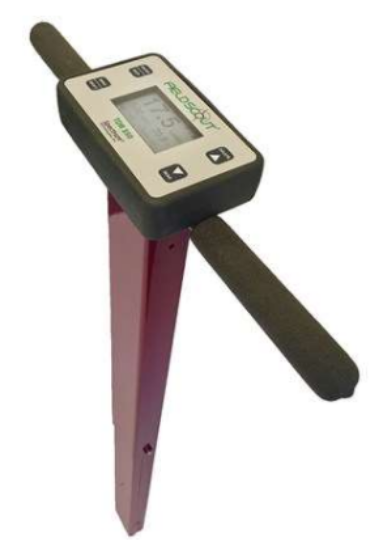
Spectrum FieldScout TDR350 Soil Moisture Meter
Measures volumetric water content, electrical conductivity and surface temperature in one reading, with Bluetooth, GPS and a ~50,000-point data logger.
Browse This Product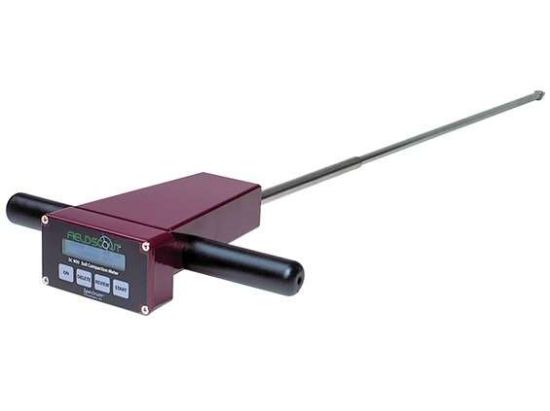
Spectrum FieldScout SC 900 Soil Compaction Meter
Measures soil compaction to 45 cm depth in 1-inch increments using an ultrasonic depth sensor, with GPS tagging and cloud reporting via SpecConnect.
Browse This Product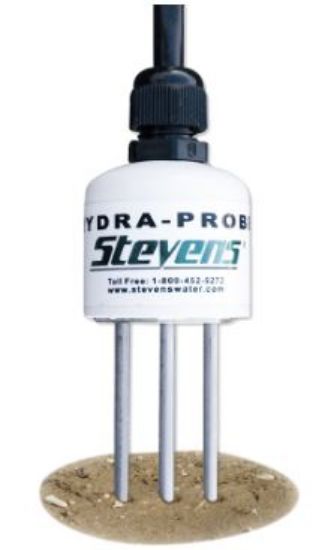
PP Systems HydraProbe II Soil Moisture & Temperature Sensor
Dual-function probe using dielectric impedance technology to simultaneously measure soil moisture and temperature, compatible with the EGM-5 CO2 analyser for combined environmental monitoring.
Browse This Product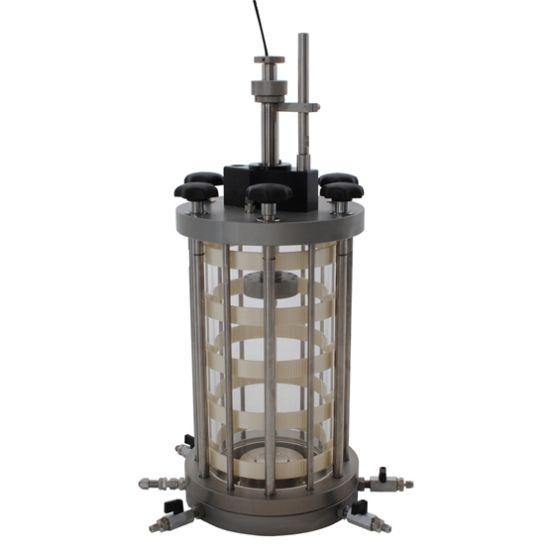
GDS Triaxial Cells
Precision-engineered geotechnical laboratory devices that evaluate the mechanical properties of soil under controlled stress conditions, compatible with a range of testing machines.
Browse This ProductMore From John Morris Group New Zealand
The johnmorrisgroup.co.nz blog is still building out its library here's what's live today.
USYD MyLab Trade Show Highlights
See the laboratory instrumentation John Morris Group showcased at a recent trade show, including several environmental and field instrument categories.
Read The RecapAdvanced Instruments Single-Sample Micro-Osmometer
A look at precision analytical instrumentation John Morris Group supplies alongside its environmental and field testing range.
Read MoreSoil Testing FAQs
What Is Soil Testing?
Soil testing is the measurement of a soil sample's physical or chemical properties moisture, compaction, nutrients, pH or mechanical strength using either a portable field instrument or laboratory analysis.
How Do You Test Soil Moisture?
A time-domain reflectometry (TDR) probe is inserted into the soil and gives a direct reading of volumetric water content, often alongside electrical conductivity and temperature on the same device.
How Do You Test Soil Nutrient Levels?
Nutrient levels can be screened on-site with a colorimetric test kit or measured precisely through a laboratory panel, which is generally the more reliable option for making fertiliser decisions.
What Is Soil Compaction And Why Does It Matter?
Soil compaction is the compression of soil particles, which reduces pore space, restricts root growth and drainage, and can significantly reduce agricultural yield or affect construction site stability if left undetected.
How Do You Test Bearing Capacity Of Soil?
Bearing capacity and shear strength are measured in a geotechnical laboratory using equipment such as a triaxial cell, which applies controlled stress to a soil sample to determine how it will behave under load this is not something a field probe can measure.
Do I Need An IANZ-Accredited Lab Test, Or Can I Test Soil Myself?
For routine monitoring, irrigation scheduling or general farm management, a field instrument is usually sufficient. For resource consent conditions, geotechnical building-consent reports, or formal contamination assessments, an IANZ-accredited laboratory result is generally required.
How Often Should Soil Be Tested?
This depends entirely on the purpose: irrigation-focused moisture monitoring is often continuous or weekly during the growing season, while a full nutrient panel is commonly run annually or seasonally, and compliance-driven testing follows whatever schedule the relevant consent or standard specifies.
What's The Difference Between A Soil Test Kit And A Soil Moisture Meter?
A soil test kit typically uses colorimetric chemistry to screen for nutrients or pH from a physical sample, while a soil moisture meter is an electronic probe that gives an instant moisture (and often EC or temperature) reading without any sample chemistry involved.
Need Help Choosing The Right Soil Testing Equipment?
Talk to John Morris Group New Zealand about field and laboratory soil testing equipment for agricultural, environmental and geotechnical applications.
Contact UsCall 0800 651 700 or contact John Morris Group New Zealand for quotation and technical support.