Two Xenon Testers, One Important Decision
The Q-Lab Q-SUN Xe-8 and the Atlas Ci-series Weather-Ometer are the two most widely specified xenon arc weathering testers for accelerated sunlight, heat and moisture exposure testing.
The real difference comes down to lamp cooling method, specimen throughput and which standards or OEM approvals your work needs to match, not one machine being universally better than the other.
Q-SUN Xe-8 Or Atlas Weather-Ometer: What Is The Real Difference?
The Q-SUN Xe-8 is an air-cooled xenon arc weathering tester with four 4200 W lamps and a 164-specimen rotating rack, built by Q-Lab and distributed across Australia and New Zealand by John Morris Group. Atlas's Ci4400 and Ci5000 Weather-Ometer models use a water-cooled xenon lamp system instead, with a different specimen rack format and a longer list of automotive OEM approvals published directly on Atlas's own specification sheets.
Both testers can meet the same core standards, including ISO 4892-2, ASTM G155 and SAE J2527, so the decision usually comes down to whether your lab has, or wants to avoid, a water-cooling supply, how many specimens you need to run per cycle, and whether a specific customer or OEM specification names one instrument brand outright.
What Is Xenon Arc Weathering Testing?
Xenon arc testing exposes materials to a xenon lamp filtered to match the spectrum of natural sunlight, combined with controlled heat, humidity and, on most models, water spray. Running a sample through weeks of continuous xenon exposure reproduces the fading, cracking, chalking and strength loss that would otherwise take months or years to appear outdoors.
Q-Lab and Atlas are the two manufacturers that dominate this equipment category worldwide, and most accelerated weathering standards, including ISO 4892-2 and ASTM G155, were written so either brand's instruments can meet them.
John Morris Group is Q-Lab's authorised distributor for Australia and New Zealand, supplying and supporting the full Q-SUN, Q-FOG and QUV range.
Common Xenon Arc Testing Applications
- •Automotive exterior and interior material approval
- •Coatings, paints and pigment lightfastness
- •Plastics and polymer UV stability
- •Textile and apparel colourfastness
- •Packaging and building product weather resistance
Q-SUN Xe-8 Or Atlas Weather-Ometer, Which Do You Need?
Start with what your governing standard or customer specification actually requires, then confirm your lab's cooling infrastructure and batch size.
Choose The Q-SUN Xe-8 If
- •You want to avoid installing a dedicated water-cooling supply
- •You need to run large specimen batches, up to 164 per cycle
- •Lower ongoing lamp maintenance is a priority
- •You already run Q-Lab equipment (QUV, Q-FOG) and want a consistent platform
Choose An Atlas Weather-Ometer If
- •Your customer specification names an Atlas Ci-series instrument directly
- •You need an automotive OEM approval Atlas publishes by name
- •Your facility already has suitable water-cooling infrastructure
- •You are correlating against years of existing Atlas-generated data
Ask Before Buying
- •Does your standard name a brand of instrument, or just a test method?
- •Do you have, or want to install, a water supply and drain for lamp cooling?
- •How many specimens do you need to expose per test cycle?
- •Do you need cross-correlation with existing Atlas or Q-Lab test data?
Q-SUN Xe-8 vs Atlas Ci5000 At A Glance
Specifications below are taken directly from each manufacturer's published documentation (Q-Lab specification bulletin LX-8001 and Atlas's Ci5000 product page).
| Criteria | Q-SUN Xe-8 | Atlas Ci5000 Weather-Ometer | Better Choice |
|---|---|---|---|
| Lamp Cooling | ✓ Air-cooled, four 4200 W lamps | Water-cooled, 12,000 W lamp system | Q-SUN, No Plumbing |
| Specimen Capacity | Up to 164 specimens, 51 x 102 mm | 11,000 cm2 exposure area, 3-tier rack | Depends On Batch Size |
| Published Lamp Life | ✓ Approx. 8,000 hours at normal irradiance | Confirm current figure with Atlas directly | Q-SUN, Published |
| Standards Coverage | ISO, ASTM, SAE, JIS, GB test methods | ASTM, ISO, AATCC, SAE, GB/T, JIS, plus named automotive OEM specs | Depends On Spec |
| Water Supply Required | ✓ No | Yes, cooling loop or self-contained option | Q-SUN |
| Control Interface | RH, black panel and chamber air temperature, irradiance sensor array | 12 inch touch screen, 14 preset plus 12 custom programs | Depends On Preference |
The Full Q-SUN Xenon Range, Not Just The Xe-8
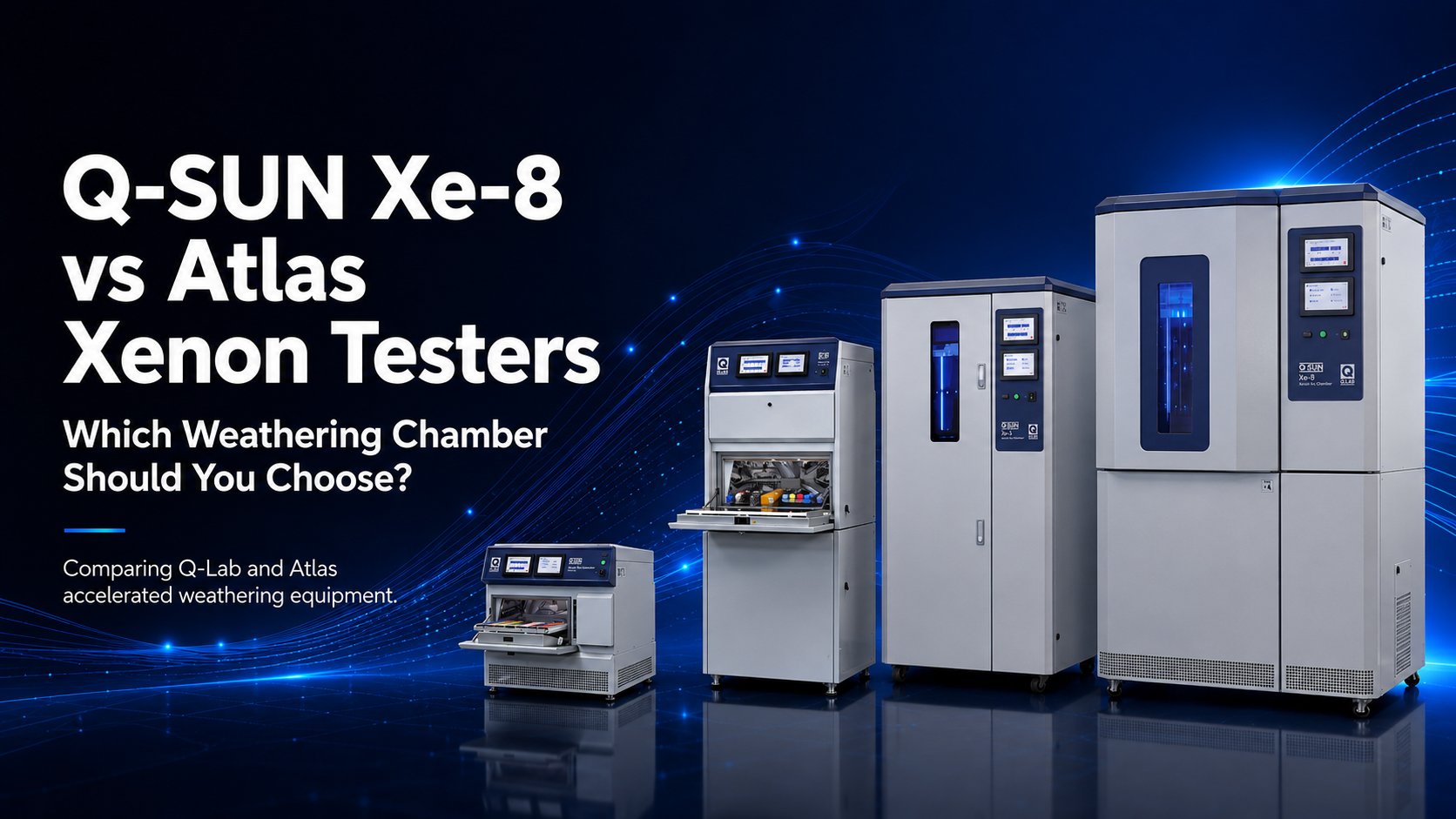
Q-SUN Xe-1: An economical single-lamp, tabletop xenon tester for laboratories that need controlled full-spectrum light and temperature exposure without a full-size chamber, using one 1800 W ozone-free xenon lamp and a flat-array specimen tray.
Q-SUN Xe-2: A full-size rotating rack tester with a single 1800 W lamp, humidity control and dual-side water spray, suited to textiles, automotive materials, coatings, plastics and packaging.
Q-SUN Xe-3: A flat-array chamber using three 1800 W lamps with front water spray, offering more capacity than the Xe-1 or Xe-2 without moving to the Xe-8's larger rotating rack format.
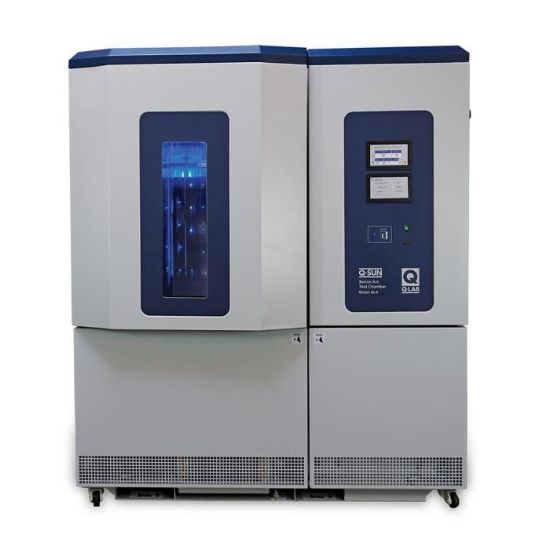
Q-SUN Xe-8: The largest model in the range, with four 4200 W air-cooled lamps and a 164-specimen rotating rack, built for laboratories running high specimen volumes or full automotive and aerospace test programs.
Why Choosing The Right Xenon Tester Matters
1. Standards Compliance
Meeting ISO, ASTM or SAE test methods on the right instrument gives you defensible, audit-ready data for customers and regulators.
2. Cross-Lab Correlation
Matching instrument type with your customer or contract lab avoids disputes over conflicting results between brands.
3. Total Cost Of Ownership
Cooling method affects power, water and maintenance costs over the tester's working life, not just the purchase price.
4. Faster Product Development
Compressing months of outdoor exposure into weeks of xenon testing speeds up material approval and time to market.
5. Batch Throughput
Specimen capacity determines how many formulations, colours or production lots you can screen in a single test cycle.
6. Named OEM Approval
Some automotive and coatings specifications name a specific instrument brand outright, which can decide the purchase for you.
Air-Cooled vs Water-Cooled Xenon Lamps: What It Means For Your Lab
A water-cooled xenon lamp system, like the one used in Atlas's Ci-series testers, needs a plumbed water supply, filtration and a discharge point, plus periodic descaling of the cooling loop to prevent mineral build-up from affecting lamp performance over time.
The Q-SUN Xe-8's air-cooled lamps remove that plumbing and descaling overhead entirely, which is one reason Q-Lab positions air cooling as lower-maintenance. The trade-off is that your lab still needs adequate ambient temperature control and airflow around the chamber, since it is drawing all of its cooling from the room rather than a water loop.
John Morris Group provides local calibration and preventative maintenance support for Q-Lab testers across Australia and New Zealand, whichever configuration your lab runs.
Q-SUN Xenon Testers At John Morris Group
John Morris Group supplies the full Q-SUN xenon arc range, from tabletop entry models through to the large-capacity Xe-8.
Q-SUN Xe-8-HBSX Large Capacity Xenon Arc Tester
High-capacity, air-cooled xenon chamber with four 4200 W lamps and a 164-specimen rotating rack, supporting ASTM G155, ISO 4892-2 and automotive/textile test protocols.
Browse The Q-SUN Xe-8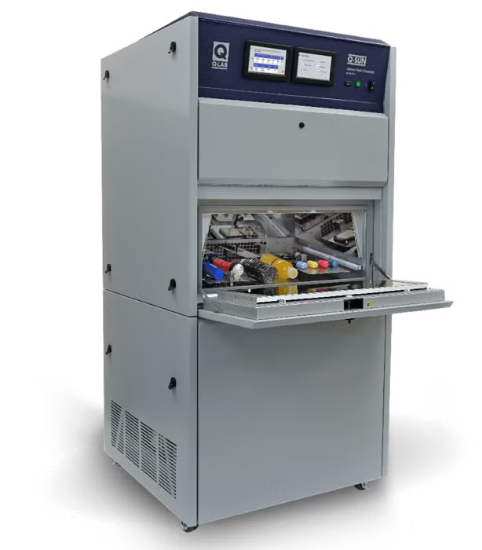
Q-SUN Xe-3-HSE Flat-Array Xenon Tester
Three 1800 W xenon lamps over a large flat-array specimen tray, with SOLAR EYE irradiance control and front water spray for sunlight, heat, humidity and rain simulation.
Browse The Q-SUN Xe-3-HSE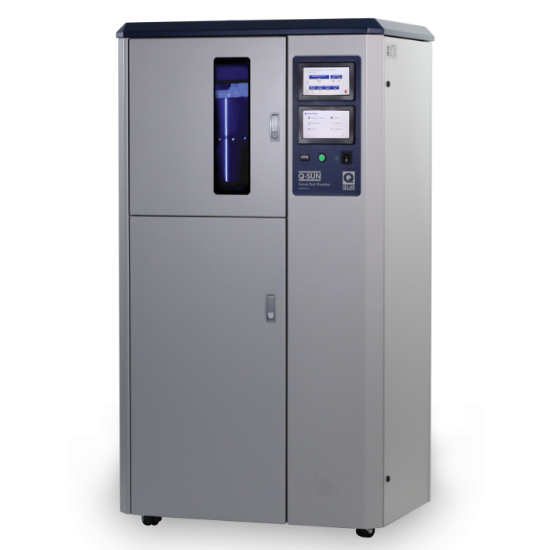
Q-SUN Xe-2-HBSE Rotating Rack Xenon Tester
Full-size rotating rack chamber with a single 1800 W lamp, humidity control and dual-side water spray for textiles, automotive materials, coatings and packaging.
Browse The Q-SUN Xe-2-HBSE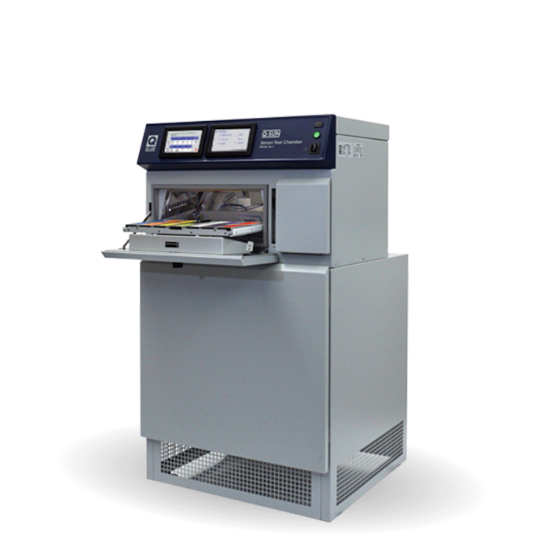
Q-SUN Xe-1-BE Tabletop Xenon Tester
Economical single-lamp, benchtop xenon chamber with one 1800 W ozone-free lamp and SOLAR EYE irradiance control, suited to labs without space for a full-size tester.
Browse The Q-SUN Xe-1-BEExplore More Q-Lab Resources
See how John Morris Group supports the Q-Lab range across Australia and New Zealand, and browse the wider weathering and corrosion testing category.
JMG Named Q-Lab's Authorised ANZ Distributor
Read about John Morris Group's appointment as Q-Lab's authorised distributor for Australia and New Zealand.
Read The AnnouncementJMG: Authorised Q-Lab Service & Sales Partner
Learn more about John Morris Group's role as Q-Lab Corporation's authorised ANZ service and sales partner.
Read MoreExplore The Full Q-Lab Testing Range
Browse QUV weathering testers, Q-FOG cyclic corrosion chambers and Q-Panel substrates alongside the Q-SUN xenon range.
Browse Q-Lab EquipmentQ-SUN vs Atlas Xenon Tester FAQs
What Is A Xenon Arc Weathering Tester?
A xenon arc weathering tester exposes material samples to a filtered xenon lamp that matches natural sunlight, along with controlled heat, humidity and often water spray, to reproduce months or years of outdoor exposure within weeks.
What Is The Difference Between Q-SUN And Atlas Weather-Ometer Testers?
The main difference is lamp cooling. Q-SUN testers, including the Xe-8, use air-cooled lamps, while Atlas Ci-series Weather-Ometers use a water-cooled lamp system. Specimen capacity, control interface and the list of named OEM approvals also differ between the two brands.
Is An Air-Cooled Or Water-Cooled Xenon Tester Better?
Neither is universally better. Air-cooled testers avoid the plumbing, filtration and descaling that a water-cooled system needs, while water-cooled systems can support higher total lamp wattage in a single unit. The right choice depends on your facility's infrastructure and your specimen throughput needs.
What Standards Does The Q-SUN Xe-8 Meet?
The Q-SUN Xe-8 is built to meet the major global xenon arc test methods, including ISO 4892-2, ASTM G155 and SAE J2527, along with a wide range of automotive, plastics and textile industry standards. Confirm the exact filter and irradiance setting needed for your specific standard with John Morris Group before ordering.
How Many Specimens Fit In A Q-SUN Xe-8?
The Xe-8's rotating rack holds up to 164 specimens at 51 x 102 mm, or 96 specimens at 67 x 145 mm, making it suited to laboratories running large batches or multiple concurrent test programs.
How Long Do Xenon Arc Lamps Last?
Q-SUN Xe-8 lamps are rated for approximately 8,000 hours of operation at normal irradiance, or around 1,000 hours at high irradiance settings. Lamp life on other brands and models varies, so check the current published figure for the specific instrument you are comparing.
Can A Q-SUN Tester Replace An Atlas Weather-Ometer For Ongoing Testing?
Both instruments can meet the same nominal standard, but results between different instrument brands and even different models are not always identical. If you are switching brands partway through a long-running test program, run a short correlation study first and check with the customer or specifying body if the standard names a brand explicitly.
Does A Q-SUN Xenon Tester Need A Water Supply?
No. Q-SUN testers, including the Xe-8, use air-cooled xenon lamps, so no plumbed water supply or drain is required for lamp cooling. Water spray for rain simulation on wet-configuration models still needs a water connection, separate from lamp cooling.
Not Sure Which Xenon Tester Is Right For You?
Talk to John Morris Group about Q-SUN xenon arc testers, and how they compare against your current standard, specification or existing equipment.
Contact UsCall 1300 501 555 or contact John Morris Group for quotation and technical support.