Key Takeaways
Fluid Metering's valveless piston pumps deliver precise, consistent flow rates (10–500 mL/min) and are chemically compatible with dialysate, saline, and disinfectants, ideal for clinical, home hemodialysis, and peritoneal systems.
Ceramic components support automated cleaning cycles, resist corrosion, and operate reliably with minimal service, ideal for engineers designing low-maintenance dialysis pump systems.
For next-generation hemodialysis and peritoneal dialysis devices, Fluid Metering offers compact, quiet, and energy-efficient pump solutions that meet flow, pressure, and fluid handling requirements while supporting regulatory compliance.
Dialysis machines are medical devices used to treat patients with kidney failure by cleaning their blood of toxins, excess fluids, and electrolytes. Clinical dialysis, home hemodialysis, and peritoneal dialysis are the three primary types of dialysis. This white paper discusses each type, including their flow rates, sises, fluid requirements, and temperatures, and provides guidance on why selecting valveless piston pumps for a new dialysis machine is the best solution.
Clinical Dialysis
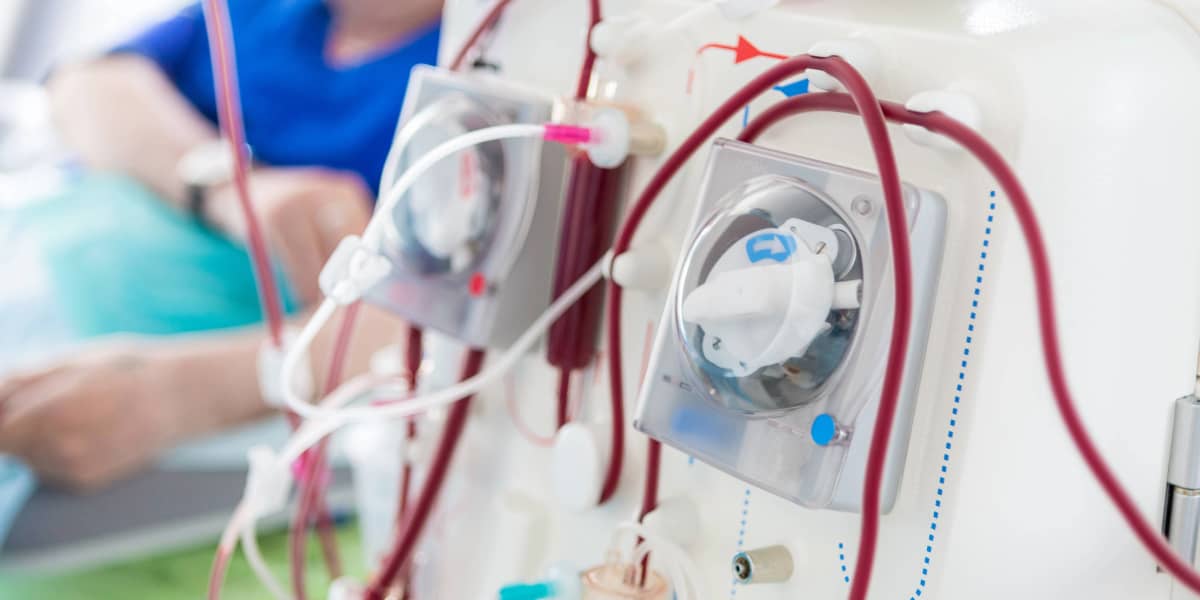
Typically, dialysis takes place in a clinical dialysis centre or hospital where a patient's blood transfers from the body via an access point, filters through a dialysis machine, and returns clean blood back to the patient. The dialysis machine has a blood pump, dialyser, and a control system. The dialyser is a hollow fiber membrane that filters the blood. The flow rate for clinical hemodialysis typically ranges from 300 to 500 mL/min.
Home Hemodialysis
Home hemodialysis (HHD) is a type of dialysis performed at home by the patient or a caregiver. Home hemodialysis machines are smaller than clinical dialysis machines and usually have a flow rate range of 200–300 mL/min. Like clinical dialysis machines, HHD machines have a blood pump, dialyser, and control system, but the compact design makes them ideal for home environments.
These machines generally use a water purification system to ensure the water is free of impurities to ensure the water is free of impurities, and some have the capability to produce their own water using a reverse osmosis system,a water purification technology that uses a semi-permeable membrane to remove impurities and contaminants.
An important feature of home hemodialysis machines is their ability to self-clean. After each treatment, the machine undergoes a cleaning process using a disinfectant solution circulated through the tubing, filters, and dialyser. Many machines now feature automated cleaning and disinfection cycles using heat, chemicals, or a combination of both,more effective than manual cleaning and reducing the risk of cross-contamination between treatments.
Peritoneal Dialysis
Peritoneal dialysis (PD) is a type of dialysis performed inside the patient's abdomen. Using a catheter, dialysis solution is infused into the peritoneal cavity where it remains for several hours to allow the exchange of waste and fluids between the patient's blood and the dialysis solution. Fluid is then drained from the abdomen and the process is repeated. PD machines are smaller and more straightforward than clinical and home hemodialysis machines and do not require a blood pump. The flow rate for PD is much lower, usually around 10–20 mL/min.
Fluids and Temperatures
| Dialysis Type | Flow Rate | Fluid | Temperature |
|---|---|---|---|
| Clinical Hemodialysis | 300–500 mL/min | Dialysate solution | ~37°C |
| Home Hemodialysis | 200–300 mL/min | Dialysate solution | ~37°C |
| Peritoneal Dialysis | 10–20 mL/min | Glucose-based solution | 20–22°C |
Choosing the Right Pump
There are key factors to consider when choosing the right pump for a next-generation dialysis machine, including required flow rates, types of fluid used, and operating pressure and accuracy. The most widely used pump for dialysis machines is a positive displacement pump, such as metering pumps designed for precision fluid delivery, which delivers a precise and constant flow rate,essential for ensuring accurate dialysis treatment. Among positive displacement pumps, valveless piston pumps are a popular choice due to their high accuracy and flow rate capabilities.
Valveless piston pumps use a reciprocating and rotating motion to generate flow. Fluid Metering valveless piston pumps deliver precise and consistent flow rates over a wide range of pressures, and can administer a variety of fluids including water, saline, and dialysate. These pumps also have a long lifespan and can operate reliably for years with minimal maintenance.
A valveless piston pump is the preferable solution for a next-generation dialysis machine. Fluid Metering valveless piston pumps meet the flow rate and pressure requirements while being highly accurate and precise, making them the best choice when selecting a pumping technology for any dialysis machine.
Key Selection Criteria
When selecting a valveless piston pump for a dialysis machine, consider the following:
💧 Flow Rate & Pressure
The pump must manage the required flow rate for the specific dialysis type and deliver fluid at the required pressure.
🧪 Fluid Compatibility
Compatible with dialysate, saline, glucose-based solutions, and disinfectants used in automated cleaning cycles.
📐 Sise & Footprint
The pump must be compact enough to fit within the dialysis machine while still delivering the required flow rate and pressure.
⚡ Power & Noise
Minimal power consumption to keep operating costs low, and quiet enough to avoid disturbance to the patient during treatment.
About Fluid Metering Pumps
John Morris Group is proud to represent Fluid Metering across Australia and New Zealand. For broader fluid handling needs, explore our Masterflex peristaltic pump range and Cole-Parmer laboratory solutions.. Fluid Metering's valveless piston pumps are used in a wide range of medical and analytical OEM applications, including dialysis machines, where precision, reliability, and chemical compatibility are critical requirements.
For more information on the full Fluid Metering range or to discuss your OEM pump requirements, please get in touch with our team.
Source: Fluid Metering,How to Select a Pump for Dialysis Machines, Stephanie Moreau & Colin Rademacher, updated 22 January 2026.
John Morris Group
Australia & New Zealand's trusted partner for scientific instruments, laboratory equipment, and technical solutions since 1962.