Sample Preparation • Expert Guide
From Soft Cells to Hard Tissue: How to Choose the Right Laboratory Homogenizer

Choosing a laboratory homogenizer is often treated as a "one-size-fits-all" purchase. Pick a brand, pick a speed, done. But anyone who has pulled a "blackened and dingy" sample out of a tube, or watched a bearing seize mid-run, knows the decision is far more nuanced than any product brochure suggests.
Whether you're extracting DNA from a delicate liver biopsy or trying to break down a fibrous plant stem, the path to a clean, representative sample depends on matching the right mechanical force to your specific material. Get it wrong and you're not just losing data. You're losing time, consumables, and potentially an irreplaceable biological specimen.
This guide is built from years of hands-on troubleshooting across tissue types, instrument brands, and lab budgets. No fluff, just the practical knowledge that keeps your samples intact and your equipment running. Explore the full range of laboratory homogenizers available from John Morris Group.
The wrong homogenizer doesn't just produce bad data. It ruins samples, burns out bearings, and wastes budget. Matching force to material is the single most important decision in sample preparation.
In This Guide
01. Why Most Probes Fail
02. Soft vs. Hard Tissue
03. The Maintenance Secret
04. Startup Budget vs. Performance
05. Industry Focus
06. Frequently Asked Questions
1. The "Oops" Factor: Why Most Homogenizer Probes Fail
Before we talk about what to buy, let's talk about how to keep what you already have alive. The single most common "death sentence" for a rotor-stator homogenizer is deceptively simple: failing to keep the mid-bearing submerged.
On probes 120 mm or longer, that bearing sits partway down the shaft and serves a critical mechanical function: it prevents the rotor from bending at high RPM. If it runs dry, it doesn't just generate heat. It burns out, effectively destroying both the generator and whatever sample happens to be in the tube.
⚠ Common Failure Mode
A dry mid-bearing doesn't give you a warning light. The first sign is often a grinding noise followed by visible discoloration of the sample. By then, the damage to your probe's internal components is already done.
This is especially dangerous with stainless steel aggregates where the liquid sample itself acts as the lubricant. No liquid contact on that bearing means metal-on-metal contact at thousands of RPM. Ensuring the generator series is properly lubricated by the liquid sample is the first step in avoiding mechanical failure.
Expert Technique
Always start at a low RPM. Position your probe off-center in the vessel and approximately one-third of the height from the bottom. This off-center placement creates a vortex that pulls the sample through the generator rather than letting it stick to the tube walls. It also prevents the probe from "pumping air," which is the telltale sign that your bearing is about to have a very bad day.
2. Categorizing Your Challenge: Soft Tissue vs. Hard Tissue
The mechanical requirement changes drastically as you move across the tissue spectrum. A technique that beautifully lyses brain tissue will barely scratch the surface of a seed coat. Conversely, the force needed for cartilage would obliterate a cell culture. Navigating the wide variety of laboratory homogenizers requires a clear understanding of your sample's resistance.
🧬 Soft Tissue
Brain, liver, cell cultures, embryonic tissue
Goal: High recovery with minimal thermal damage. These samples need gentle, uniform shear forces, not brute impact.
→ Potter-Elvehjem (DWK/Kimble) glass homogenizers
→ Ultrasonic systems (Bandelin) for precise cavitation
→ Kinematica 3 mm micro-probe for volumes as low as 10 μL
Best for: High-recovery lysates, organelle isolation, nucleic acid extraction
🪨 Hard Tissue
Cartilage, seeds, soil, fibrous plant material
Goal: High-velocity impact forces in a sealed, contamination-free environment.
→ Omni Bead Ruptor 12, high throughput, sealed tubes
→ Benchmark BeadBug, compact, contamination-free
→ Ceramic or garnet beads in sealed environments
Best for: Fibrous samples, environmental testing, cross-contamination prevention
Bead mills are effectively "blunder-proof" for hard tissue. Because the sample is sealed with the beads, there's no risk of it escaping out the top of a probe. That alone makes them the safest choice for labs processing soil, seeds, or heavily fibrous material.
3. The Maintenance Secret That Manuals Don't Mention
Here's something most lab managers learn the expensive way: your generator probe is not a disposable unit. It's a precision instrument with individually replaceable internal components, and treating it that way can save your lab thousands of dollars a year.
High-quality brands like IKA and Kinematica engineer their probes so that the internal PTFE bearings and seals can be swapped out individually. These are "wearing parts" by design. They're meant to be replaced periodically, just like brake pads in a car. But because most manuals bury this information (or skip it entirely), many labs simply run the probe until it fails, then spend $2,000+ on a complete replacement.
Cost-Saving Practice
Stock a small inventory of replacement PTFE bearings and seals for your most-used probes. A scheduled swap every 6 to 12 months (depending on usage intensity) can extend the working life of a probe by 3 to 5 years beyond what most labs achieve. Keep a supply of homogenizer parts and accessories on hand. The parts themselves typically cost a fraction of a new generator assembly.
This is also where your relationship with a knowledgeable distributor matters. A good technical partner won't just sell you a new probe. They'll help you identify which wearing part actually failed and show you how to do the swap yourself.
4. Startup Budget vs. Performance: The Real Numbers
If you're a new lab balancing limited capital against high expectations, you need to weigh initial price against total cost of ownership, including consumables, maintenance, and the hidden time cost of manual operation. Here's how three popular entry points compare:
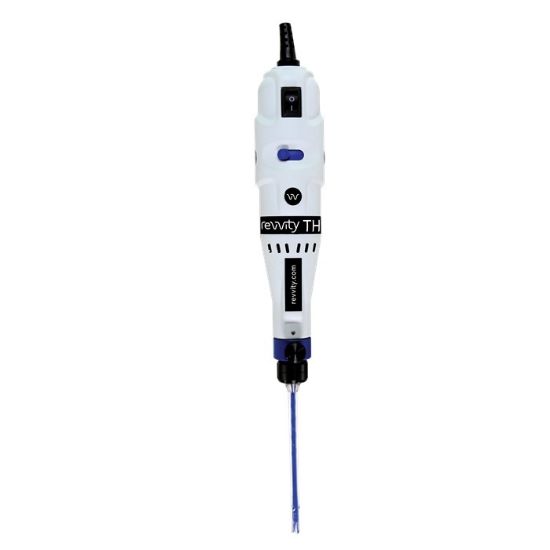
| Feature | Omni TH220 | BeadBug D1030 | PT 1200 E | IKA T 25 |
|---|---|---|---|---|
| Type | Rotor-Stator | Bead Mill | Handheld Rotor-Stator | High-Speed Rotor-Stator |
| JMG No. | 1524148 | 29116680 | 32811 | 1007779 |
| Best For | Lowest entry cost for motorized disruption | Contamination control for 3 samples at once | Micro-volumes (down to 10 µL) and precious samples | High-volume workhorse for tough solids and emulsions |
| Volume Range | General lab volumes | 25 µL to 1.8 mL | 0.01 mL to 250 mL | 0.3 mL to 2,000 mL |
| Maintenance | Hands-on probe maintenance | Low; focus on prefilled tubes | Features "EasyClean" aggregates | Robust 316SS; full line of replacement parts |
| Price (Incl. GST) | $1,903.00 | $2,814.90 | $3,787.30 | $8,778.00 |
| Recurring Cost | Low; reusable probes | Moderate; recurring bead kits | Low; reusable aggregates | Lowest; purely reusable stainless steel |
Why These Models Win for Startups
Omni TH220
The most economical path to moving away from manual grinding to motorized disruption. Ideal for general tissue work where recurring consumable costs need to be minimised.
Benchmark BeadBug D1030
For startups focused on molecular biology, this is a "blunder-proof" solution. The sealed-tube design virtually eliminates cross-contamination and sample loss, which can be far more expensive than the cost of the bead kits themselves.
Kinematica PT 1200 E
The specialist for labs working with precious, tiny samples. It can be equipped with a 3 mm aggregate to handle volumes as small as 10 µL, ensuring high recovery with minimal material "escape." Its ergonomic handheld design also makes it the best choice for repetitive processing tasks.
IKA T 25 Ultra-Turrax
The high-volume workhorse. It handles everything from 0.3 mL to 2 litres, features a digital display for precise speed control, and its 316 stainless steel generators are fully serviceable. Because the parts are individually replaceable, the total cost of ownership over 5 to 10 years is often lower than systems relying on single-use consumables. This is the long-term investment that grows with your lab.
5. Industry Focus: From Food Safety to Forensics
Your industry's regulatory requirements often narrow the decision more than your sample type alone. Here's where the real-world application matters most:
🍎 Food Safety & Environmental Testing
When testing for lead, pesticide residues, or microbial contaminants, automated systems that handle large batches consistently are essential. The Spex Geno/Grinder is built for exactly this: high-throughput homogenization that meets the reproducibility requirements of national testing standards. Manual probe work simply can't match the consistency at the volumes food safety labs demand.
🔬 Forensic Pathology
Precision and containment are non-negotiable. Sealed bead kits prevent the aerosolization of biological samples, protecting both the researcher's safety and the integrity of the nucleic acid extraction. An unsealed rotor-stator at high speed in this context isn't just imprecise, it's a biohazard risk.
💊 Pharmaceuticals
For API (active pharmaceutical ingredient) extraction or creating nano-emulsions, high-pressure homogenizers deliver the particle size uniformity required for content uniformity testing. A poorly dispersed formulation can cause a product to fail regulatory review, so precision here has direct commercial consequences.
Frequently Asked Questions
Why do rotor-stator homogenizer probes fail?
The most common cause is running the mid-bearing dry. On probes 120 mm or longer, this bearing prevents rotor deflection at high speed. Without liquid lubrication, it overheats and seizes, destroying the generator and contaminating the sample in the process.
What is the best homogenizer for soft tissue like brain or liver?
Potter-Elvehjem glass homogenizers (DWK/Kimble) and ultrasonic systems (Bandelin) are the go-to choices for gentle, uniform disruption. For micro-volumes down to 10 μL, the Kinematica 3 mm micro-probe is widely regarded as the gold standard to prevent material escape.
What is the best homogenizer for hard or fibrous samples?
Bead mills, specifically the Omni Bead Ruptor 12 or Benchmark BeadBug, using ceramic or garnet beads in sealed tubes. The sealed environment eliminates cross-contamination and prevents sample loss that commonly occurs with open-probe systems on tough matrices.
How do I extend the life of my homogenizer probe?
Replace PTFE bearings and seals individually rather than discarding the entire probe. Brands like IKA and Kinematica design these as user-replaceable wearing parts. A proactive swap every 6 to 12 months can extend a $2,000+ probe's life by 3 to 5 years.
Which homogenizer is best for a startup lab on a tight budget?
The Omni TH220 ($1,903 incl. GST) offers the lowest entry cost for motorized disruption. If cross-contamination control is critical, the Benchmark BeadBug D1030 ($2,814.90) provides sealed-tube processing with minimal operator skill required. For precious micro-volumes, the Kinematica PT 1200 E ($3,787.30) handles samples as small as 0.01 mL. For labs that need high-volume versatility and long-term durability, the IKA T 25 Ultra-Turrax ($8,778.00) processes up to 2 litres with fully serviceable 316 stainless steel generators.
Ready to Optimize Your Sample Prep?
Whether you're struggling with sample loss in micro-volumes or your current probes are running hot, matching the right aggregate or bead kit to your research is essential for reproducible data. Our technical team can help you identify the right instrument, probe, or bead configuration for your specific application.
To discuss your specific requirements or to schedule a demonstration, get in touch today.
John Morris Group
Australia & New Zealand's trusted partner for scientific instruments, laboratory equipment, and technical solutions since 1962.