How To Choose A Refractometer: Handheld Or Benchtop
A refractometer measures how strongly a sample bends light to work out its concentration, most often reported as Brix or refractive index.
The right instrument depends on where and how often you are measuring: a handheld unit for quick checks on the move, or a benchtop instrument for higher accuracy and repeatability at a fixed station.
How Does A Refractometer Work?
A refractometer shines light through a small sample and measures the angle at which the light bends as it passes from the sample into a prism. That angle shifts with the sample's concentration, so the instrument converts it directly into a reading, usually Brix (sugar or solids content) or refractive index (nD).
Handheld refractometers do this inside a compact, battery-powered body for quick spot checks in the field or on a production line. Benchtop refractometers use a larger, more stable optical system, often with built-in temperature control, for tighter accuracy and repeatability, at the cost of portability.
What Is A Refractometer?
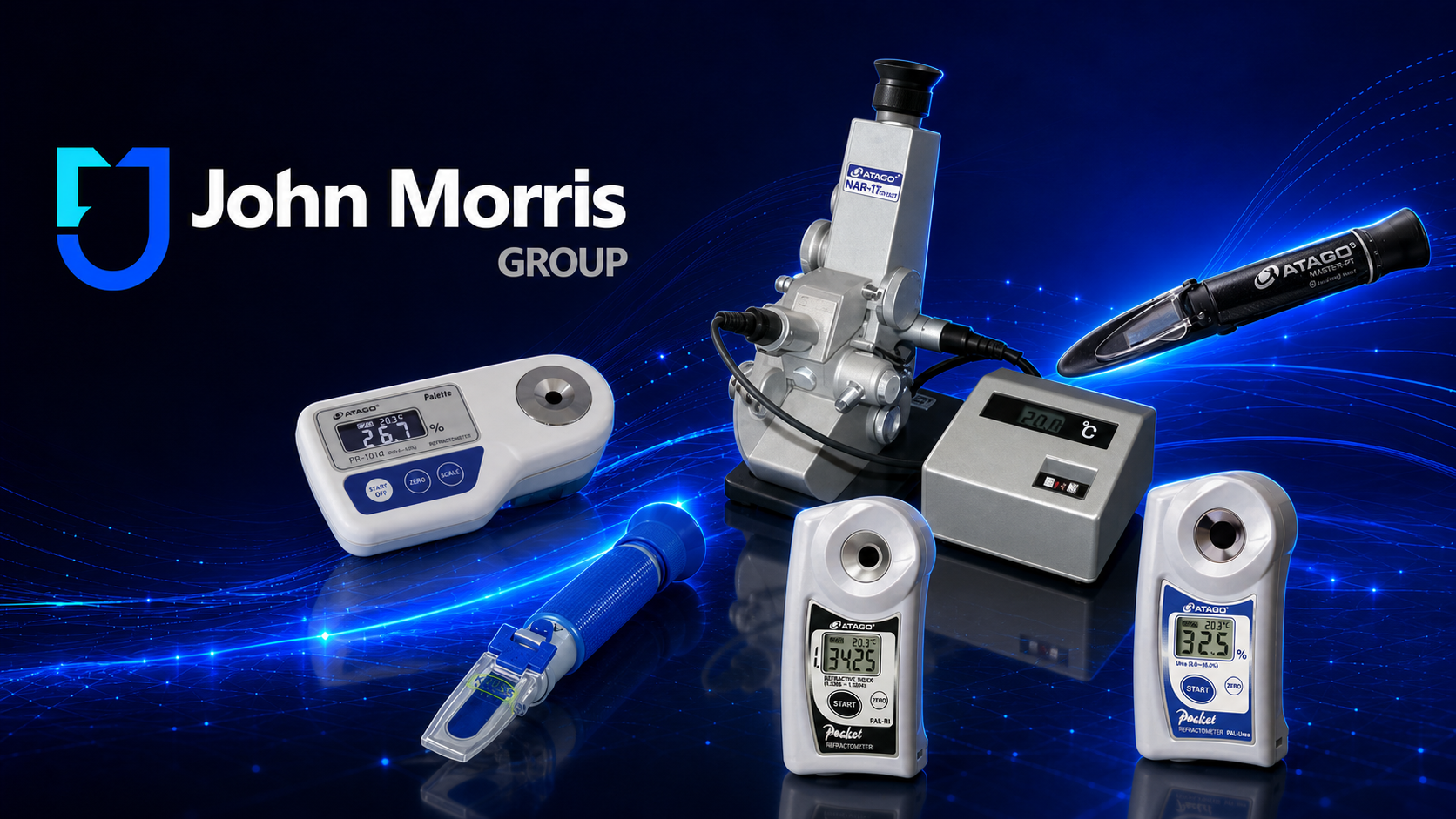
A refractometer is an optical instrument that measures refractive index, the degree to which a sample bends light passing through it. That refractive index reading is then converted, using an appropriate scale, into a practical concentration value such as Brix (sugar or solids content), salinity or specific gravity. ATAGO, the brand John Morris Group exclusively distributes across Australia and New Zealand, is one of the most established refractometer manufacturers, with model ranges spanning simple analog handheld units through to precision digital and benchtop Abbe instruments.
Refractive index and Brix are related but not interchangeable. Refractive index (nD) is a fundamental physical property, while Brix is a sugar-concentration scale calibrated against sucrose solutions. Most food, beverage and agricultural refractometers read in Brix; industrial, chemical and optical applications more often need the raw refractive index value.
Refractometers are frequently used alongside other concentration checks in the same workflow. See our guide to osmometers for another concentration-measurement technique found in similar laboratories.
Common Refractometer Applications
- •Brix and sugar content in juice, wine and honey
- •Refractive index checks in oils, resins and optical materials
- •Coolant, urea (AdBlue) and cutting fluid concentration checks
- •Salinity and specific gravity in aquaculture and marine use
- •Protein and clinical fluid concentration testing
See ATAGO Refractometers Across Different Industries
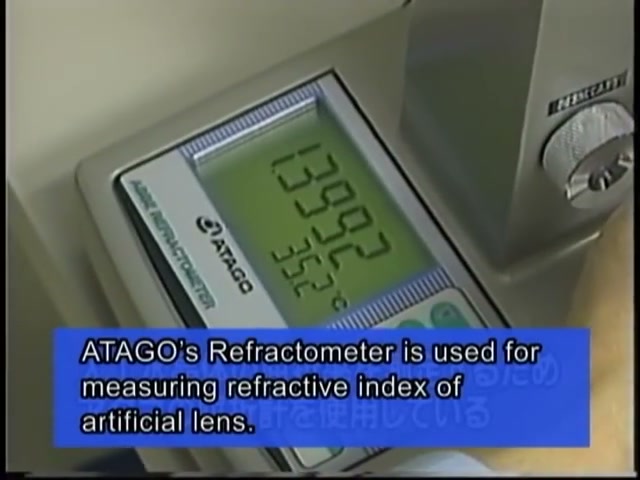
A benchtop ATAGO refractometer reading refractive index, from the ATAGO Refractometers overview video.
ATAGO Refractometers: a demonstration of refractometer principles and applications across industries, from the John Morris Group YouTube channel.
Handheld Or Benchtop, Which Do You Need?
Start with where the measurement happens and how much accuracy the result needs to support, then confirm sample type, scale and budget.
Choose Handheld If
- •You need quick spot checks in the field, on a line or at goods receival
- •Portability and battery operation matter more than lab-grade precision
- •Samples are checked in small numbers throughout the day, not one batch
- •Budget is a primary constraint (handheld refractometers are generally considerably less expensive than precision benchtop instruments)
Choose Benchtop If
- •You need the tightest accuracy and repeatability for QC or R&D
- •Samples are dark, viscous or otherwise hard to read on a handheld prism
- •Measurements happen at a fixed station rather than out in the field
- •You need to measure solids as well as liquids (Abbe-style benchtop units)
Ask Before Buying
- •What scale do you need: Brix, refractive index, or an application-specific scale like urea or salinity?
- •Does the sample need automatic temperature compensation, or will you control ambient temperature yourself?
- •How many drops of sample are available, and can the unit read that volume?
- •Does the reading need to meet a specific standard or certificate for audit purposes?
Handheld Vs Benchtop Refractometer At A Glance
If you want a quick answer, this table shows where a handheld unit is usually the better choice and where a benchtop instrument earns its extra cost.
| Criteria | Handheld Refractometer | Benchtop Refractometer | Better Choice |
|---|---|---|---|
| Typical Accuracy | Good for routine checks | ✓ Higher, lab-grade precision | Benchtop |
| Portability | ✓ Compact, battery-powered | Fixed to a bench, mains-powered | Handheld |
| Sample Type | Liquids only | ✓ Liquids, and solids on Abbe-style units | Depends On Application |
| Typical Price (AU) | ✓ From around $300 | From around $1,300 (Abbe models from around $5,200) | Handheld |
| Measurement Speed | ✓ Seconds, from 2 to 3 drops | Slightly slower, more setup | Handheld |
| Best For | Field checks, spot testing, production lines | QC labs, R&D, calibration-critical work | Depends On Application |
Which Refractometer Is Best For My Application?
A quick reference for the type of refractometer most laboratories and production sites reach for, by sample and use case.
| Application | Recommended Type |
|---|---|
| Food And Beverage Brix QC | Digital handheld |
| Field Testing And Goods Receival | Handheld, analog or digital |
| Fruit And Juice | Handheld Brix (manual or digital) |
| Oils And Resins | Digital refractive index |
| Solid Materials (Resins, Gemstones, Polymers) | Abbe benchtop |
| High-Precision QC Or R&D | Benchtop |
| AdBlue / Urea Concentration | Application-specific handheld |
| Coffee Concentration | Coffee-specific digital handheld |
Handheld Refractometers Explained
Handheld refractometers put the same optical principle into a compact, one-hand device. Analog models like the ATAGO MASTER-PT read a Brix scale through an eyepiece after a couple of drops of sample are placed on the prism. Digital pocket models, and pen-style units like PEN-PRO, give a direct numeric readout instead.
Application-specific handheld models exist for almost every industry ATAGO serves, from PAL-UREA for AdBlue concentration through to dedicated coffee, wine and honey scales, so the right handheld choice often comes down to matching the scale to the sample rather than the instrument itself.
See ATAGO Handheld Refractometers In Action
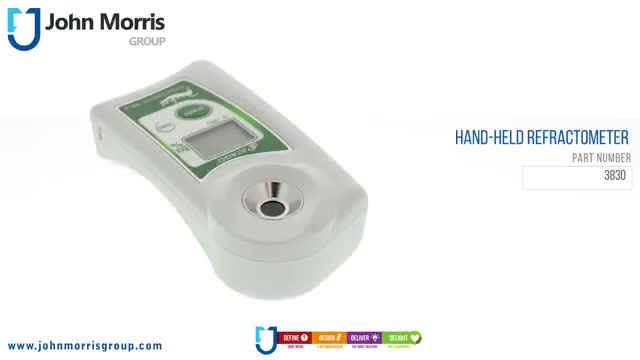
ATAGO PAL-3: a digital pocket refractometer reading any sample with automatic temperature compensation.
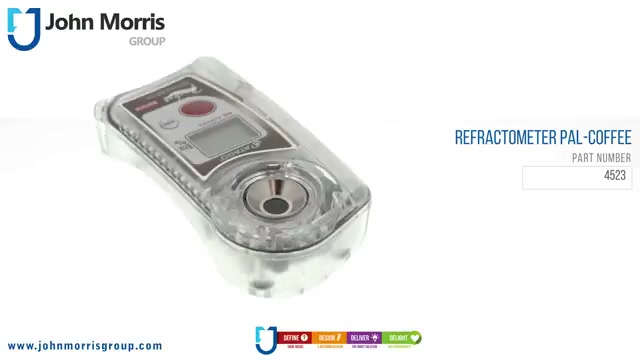
ATAGO PAL-COFFEE: an application-specific handheld model. See our dedicated coffee refractometer guide for how cafes and roasters use this scale.
Digital Vs Analogue Refractometers
Handheld and portable-benchtop refractometers each come in an analog (optical) or digital version. The choice affects how the reading is taken as much as how accurate it is.
| Criteria | Digital Refractometer | Analogue Refractometer | Better Choice |
|---|---|---|---|
| Ease Of Reading | ✓ Direct numeric display, no interpretation needed | Reads a light/dark boundary through an eyepiece | Digital |
| Accuracy And Resolution | ✓ Typically finer resolution (down to 0.0001 nD on precision models) | Good for routine checks, limited by eyesight and scale markings | Digital |
| Automatic Temperature Compensation | ✓ Standard on almost all digital models | Available on many models, but not universal | Digital |
| Battery Requirements | Requires batteries; most models rate several thousand readings per set | ✓ None required, works indefinitely with no power source | Analogue |
| Typical Cost | Generally higher than an equivalent analog model | ✓ Usually the lower-cost option in a given range | Analogue |
| Best Applications | Data logging, compliance records, low-light or fast-paced environments | Simple routine checks, harsh or dusty sites where electronics are a liability | Depends On Application |
Benchtop Refractometers Explained
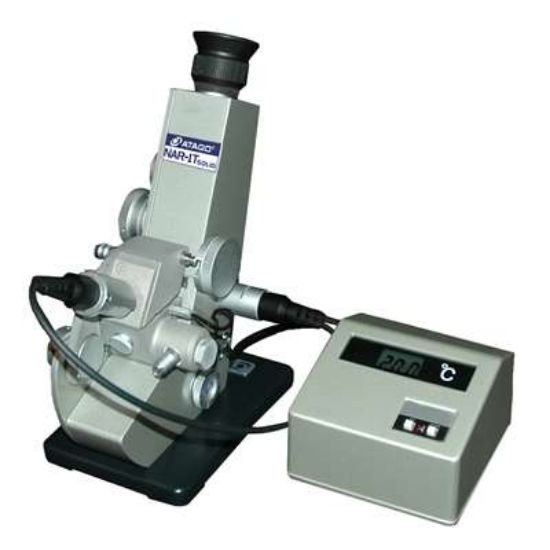
Benchtop refractometers trade portability for accuracy and versatility. Abbe-style instruments, like the ATAGO NAR-1T, use a larger prism assembly and can measure solid samples such as resins, gemstones and polymers as well as liquids, reading refractive index directly to four decimal places.
Portable-benchtop hybrids, like the PR-101α, sit between the two categories: they run on battery power and can be carried between stations, but are built around a larger, more stable optical bench than a pocket unit, trading some portability for a wider Brix range and programmable user scales.
What Is A Brix Refractometer?
A Brix refractometer is a refractometer calibrated to report its refractive index reading directly on the Brix scale, a measure of dissolved solids (mostly sucrose) as a percentage by weight. One degree Brix equals roughly one gram of sucrose per 100 grams of solution, which is why the scale is so widely used across food, beverage and agricultural quality control, from checking ripeness in fruit and grapes through to sugar content in juice, honey, wine must and syrups.
Brix refractometers are built around a specific measurement range, commonly 0 to 32%, 0 to 50% or 0 to 95%, and choosing a scale that comfortably covers your sample's expected concentration matters more than chasing the widest range available: a narrower-range model calibrated for your typical samples will generally read more precisely than a wide-range instrument used well below its top end.
Why Refractometers Are Widely Used For Concentration Testing
1. Faster Quality Decisions
A single reading takes seconds, giving an immediate accept or reject decision at goods receival, on a production line, or in the field, without waiting on a full lab test.
2. Minimal Sample Required
Most readings need only 2 to 3 drops of sample, so testing rarely reduces batch yield or damages the material being checked.
3. Wide Industry Coverage
The same optical principle scales from an entry-level handheld Brix meter to a precision benchtop Abbe instrument, covering food and beverage, agriculture, chemical, automotive and optical applications.
4. Supports Compliance And Audit
Calibrated readings, backed by traceable calibration fluids and certificates, provide auditable evidence for quality standards and customer specifications.
5. Low Running Cost
With no consumables beyond an occasional calibration fluid and a soft cloth, a refractometer is one of the lowest running-cost instruments in a QC toolkit.
6. Application-Specific Accuracy
Purpose-built scales, such as urea for AdBlue or specific gravity for battery acid, remove the manual conversion step and reduce reading error compared with a generic scale.
How Do You Calibrate A Refractometer?
Most refractometers are calibrated against distilled or deionised water, which should read 0.0 Brix, or a refractive index of 1.3330 at 20°C. Place a few drops of distilled water on the prism, close the cover, and adjust the calibration screw on analog and manual models, or run the built-in calibration function on digital models, until the reading matches zero.
For readings across a wider range, a certified calibration fluid, such as ATAGO's own standard liquids or a UKAS/NIST-traceable fluid, checks accuracy at a known non-zero value rather than just at zero. This matters most for benchtop and precision digital units used in compliance-sensitive QC work.
Temperature affects almost every refractometer reading, since both the sample's refractive index and the prism's optical properties shift with temperature. Automatic Temperature Compensation, built into most digital and many analog models, corrects for this in real time; refractometers without it need a manual temperature correction table or a controlled-temperature environment for accurate results.
Refractometers At John Morris Group
A cross-section of ATAGO and Krüss refractometers spanning handheld, portable-benchtop and precision benchtop Abbe instruments, so you can match the right optical bench and scale to your application. Pricing shown is indicative only; confirm current pricing on each product page.
ATAGO Abbe Refractometer, NAR-1T, Solid, nD 1.3000 to 1.7000
A precision Abbe instrument for laboratories that need to measure solid samples, such as resins, gemstones and polymers, as well as liquids. Reads refractive index directly to four decimal places (nD 1.3000 to 1.7000) with a built-in 589 nm light source, making it the choice for R&D and reference-grade QC rather than routine spot checks. Higher-cost laboratory option; see the product page for current pricing.
Browse This Refractometer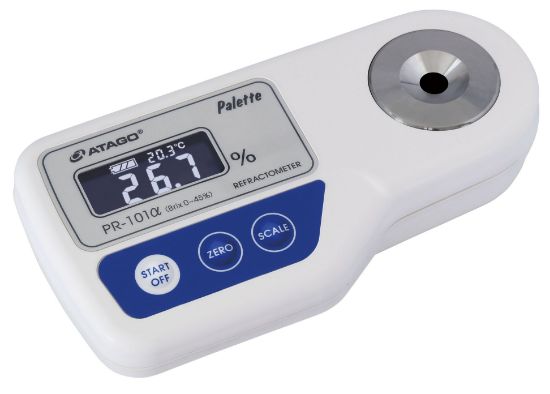
ATAGO Benchtop / Portable Refractometer, PR-101α, Brix 0 to 45%
Sits between handheld and full benchtop: battery-powered and portable, but built around a larger optical bench than a pocket unit, with programmable user scales and External Light Interference (ELI) technology that keeps readings consistent under varied lighting. A practical fit for fruit juice, food, beverage, cutting oil and cleaning-liquid concentration checks. Mid-range investment; see the product page for current pricing.
Browse This Refractometer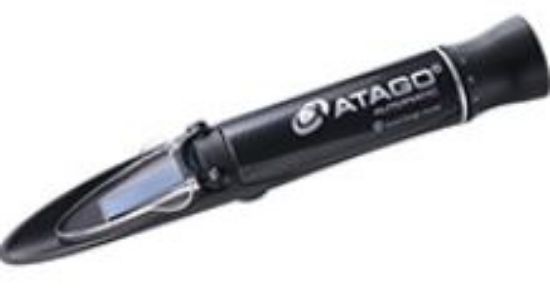
ATAGO Manual Refractometer, MASTER-PT, 0 to 33% Brix
An ATC-equipped analog option built for salty or acidic samples such as fruit juices, soups, sauces and water-soluble cutting oils, needing only 2 to 3 drops per reading. A good entry point for routine Brix checks where a full digital readout isn't required. Entry-level pricing; see the product page for current pricing.
Browse This Refractometer
A. Krüss Optronic Hand Refractometer, HRB 18-T, 0 to 18% Brix
A dedicated manual option for lower-Brix liquids (0 to 18%), suited to food, beverage and industrial applications where samples sit toward the diluted end of the scale rather than needing a full 0 to 95% range. Entry-level pricing; see the product page for current pricing.
Browse This Refractometer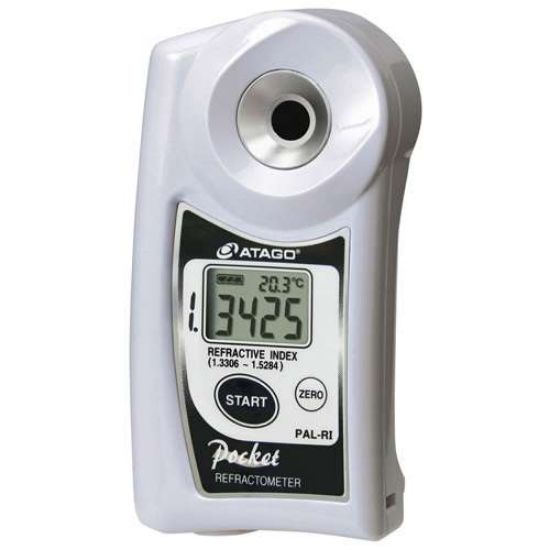
ATAGO Digital Refractometer, PAL-RI, nD 1.3306 to 1.5284
A pocket digital unit reading refractive index directly rather than Brix, with automatic temperature compensation and 0.0001 resolution, well suited to oils, resins and other non-food industrial samples where nD is the specification that matters rather than a sugar-content scale. Mid-range pricing; see the product page for current pricing.
Browse This Refractometer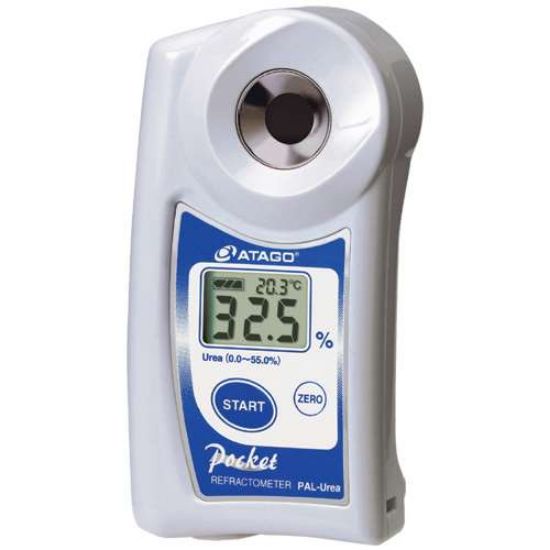
ATAGO Refractometer, PAL-Urea, Diesel Exhaust Fluid, 0 to 55%
A purpose-built handheld for checking AdBlue (DEF) concentration against the 32.5% urea standard SCR engines require, removing the need to manually convert a generic reading. IP65 rated and good for around 11,000 measurements per battery set. Mid-range pricing; see the product page for current pricing.
Browse This RefractometerExplore More Concentration And Calibration Resources
Refractometers sit alongside other concentration-measurement and calibration topics in a laboratory QC program. See how these related guides connect.
Coffee Refractometer Guide
See why measuring coffee concentration matters and how cafes and roasters use a dedicated refractometer scale.
Read The Coffee Refractometer GuideWhat Is An Osmometer?
Compare osmometers with refractometers as two different ways to measure concentration in a laboratory sample.
Read The Osmometer GuideViscometer Calibration Guide
See how viscosity standards and calibration fluids work, and how the same calibration discipline applies to refractometers.
Read The Calibration GuideRefractometer FAQs
What Is The Difference Between A Handheld And A Benchtop Refractometer?
A handheld refractometer is a compact, often battery-powered unit for quick spot checks, read through an eyepiece on analog models or a digital display on pocket models. A benchtop refractometer is a larger, mains-powered instrument built for higher accuracy, temperature control and, in Abbe-style designs, the ability to measure solid samples as well as liquids.
How Do You Calibrate A Refractometer?
Most models are calibrated against distilled water, which should read 0.0 Brix or a refractive index of 1.3330 at 20°C. Certified calibration fluids at known non-zero values verify accuracy across the rest of the measurement range, particularly for benchtop and precision digital instruments.
Does Temperature Affect Refractometer Readings?
Yes. Refractive index changes with temperature for almost every sample, and the prism itself responds to temperature too. Automatic Temperature Compensation, built into most digital and many analog refractometers, corrects for this automatically; instruments without it need a manual correction table or a controlled-temperature room.
How Accurate Is A Refractometer?
Accuracy depends on the instrument class. Simple handheld analog units are accurate enough for routine field and production checks. Precision digital and benchtop Abbe instruments read refractive index to four decimal places, suited to laboratory QC, R&D and calibration work.
How Do You Read A Refractometer?
Place the sample on the prism and close the daylight plate on analog models or the cover on digital models. On an analog unit, look through the eyepiece and read the scale where the light and dark boundary crosses it. On a digital unit, read the numeric value directly off the display.
Can A Refractometer Measure Alcohol Content?
A standard Brix or refractive index refractometer cannot measure alcohol content directly once fermentation has begun, because alcohol and sugar affect the reading in opposite directions. Brewers and distillers typically take a Brix reading before fermentation and combine it with a hydrometer or specific-gravity reading afterward, or use a purpose-built alcohol refractometer scale designed for the correction.
How Does A Refractometer Measure Salinity?
A refractometer measures the refractive index of a saline solution, which increases predictably with dissolved salt content. Salinity-scale refractometers convert this reading directly into practical salinity units or specific gravity, commonly used in aquaculture, marine research and reef aquarium management.
How Do You Clean A Refractometer?
Wipe the prism immediately after each reading with a soft, lint-free cloth or lens tissue, since dried sample residue can scratch the prism surface or skew the next reading. Avoid abrasive materials, and rinse with distilled water for sticky or sugary samples before drying.
Need Help Choosing The Right Refractometer?
Talk to John Morris Group about handheld and benchtop ATAGO refractometers for food, beverage, industrial and laboratory concentration testing.
Contact UsCall 1300 501 555 or contact John Morris Group for quotation and technical support.