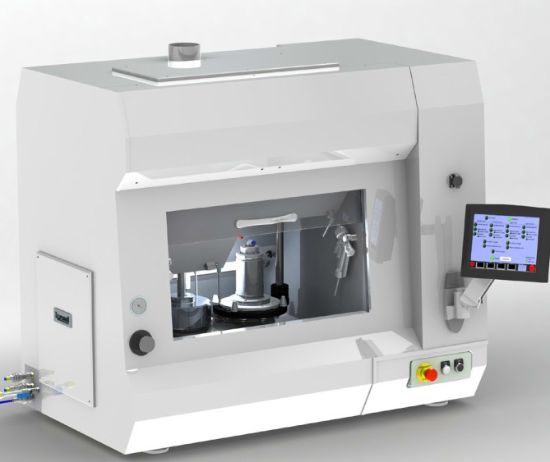
The High Speed lapping and polishing machine is specifically designed for processing Diamond and similar hard materials, used in production and research laboratories. Superior real time analytical capabilities The Logitech High Speed Lapping and Polishing machine provides a flexible, extremely reliable system for processing and analysis of hard materials, such as Gallium Nitride, Sapphire, Diamond and Silicon Carbide.
An array of advanced in-situ sensors constantly provide the operator with real-time process information. Monitored parameters include the CoF (during polishing), pad, slurry, plate and carrier/pad interface temperatures. These sensors will relay information back to the operator in order to identify and evaluate important process conditions or process stability - factors which are paramount for optimal performance.
Lapping Capability
The substantial lapping workstation has a 40cm (16”) diameter plate. For optimum results, the machine has been designed to work in combination with a Logitech Precision Lapping Jig. The chemically resistant high speed system comes supplied as standard with the ability to process substrates, part wafers and full wafers up to 4”/100mm in diameter using a variety of Logitech lapping jigs.
Polishing Capability
Materials are quickly and easily polished using a Logitech Polishing pad on the 400mm (16”) polishing plate. The system carrier can apply high downloads to increase the polishing rate on harder materials, whilst the head back pressure can be used to adjust the sample shape. The machine has been designed for speed and flexibility, providing quick and easy change over of plates and multiple polishing pad options.
Enhanced Control at your fingertips
The user interface on the high speed system utilises internationally accepted analytical software technology (Labview 10). All functions are controlled via the touch panel. Data can be taken from the in-situ process sensors and sub-systems and exported (via the USB port) to third party statistical or analytical software. The ability to extract information in standard file formats provide added benefits though a greater understanding of the reactions occurring during the processes.